The Latest on GLP-1's

April 24, 2026

 Author:  Kamryn Hilton, RDN, LDN

Image:  GenScript

The Latest on GLP-1's

GLP-1 receptor agonists are a hot topic in the weight loss industry. If you have been considering using this medication to help reach your physique goals, it is crucial that you are informed of the most up-to-date research, to help you make the best decision for yourself.

Background on GLP-1’s

In 2022, the obesity rates in the United States reached an all-time high at 39.9%. Since then, the US adult obesity rate has gradually declined, while the percentage of GLP-1 medication use has increased from 5.9% in February 2024 to 12.4% in 2025.  

While GLP-1's were originally designed to help manage type 2 diabetes, more Americans have turned these drugs such as semaglutide (brand names Ozempic and Wegovy) for weight loss purposes.

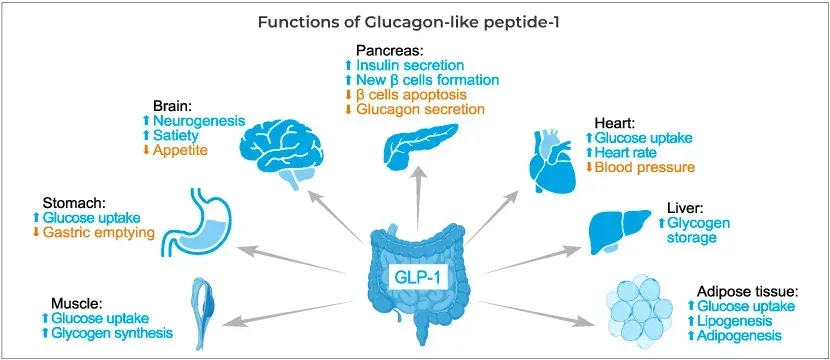
GLP-1 receptor agonists are prescription medications that mimic a naturally occurring hormone produced in your intestines called glucagon-like peptide-1. This hormone helps your pancreas release insulin when blood sugar is high, and it also tells your brain when you are full. So, it works on blood sugar and appetite at the same time.

GLP-1’s are often mistakenly thought to be a magic solution that leads to quick and easy weight loss. In reality, it simply helps individuals decrease their calorie intake through more stable blood sugar, lower appetite, and less “food noise”, and is most effective when paired with lifestyle changes like proper diet and exercise.  

Most Recent Research on GLP-1’s

Benefits of GLP-1 Use

Initially developed for blood glucose control and weight management, GLP-1 use has led to favorable metabolic and endocrine outcomes, such as lower A1c levels and weight loss. Studies have also shown improvements in several other areas of the body including cardiovascular health, kidney function, respiratory health, arthritis, sleep apnea, and possibly liver function. This is most likely attributed to the positive outcomes that follow weight loss.

Risks and Concerns of GLP-1 Use

While there are promising benefits many people have experienced through GLP-1 use, those benefits do not come without risk.

Gastrointestinal Effects

The most prevalent adverse effects associated with GLP-1 use include gastrointestinal symptoms, such as nausea, vomiting, diarrhea, and constipation. These symptoms often occur during the initial treatment phase and affect roughly 50-60% of patients. However, they generally diminish over time, and the occurrence tends to be dose dependent.


The gallbladder plays a role in the digestion and absorption of dietary fats by storing, concentrating, and releasing bile (a digestive fluid produced in the liver). Several randomized control trials have demonstrated a significantly higher prevalence of gallbladder disorders among patients using a GLP-1 compared to placebo. Gallbladder issues that have consistently been observed include uncomplicated gallbladder stones, complicated gallbladder stones, cholecystitis with/without gallbladder stones, and biliary obstruction. 


Other concerns have arisen from the use of GLP-1’s, such as intestinal obstructions and acute pancreatitis. However, study results are mixed, revealing the need for more extensive research to determine any associations and causations. 

Muscle Loss

A decline in skeletal muscle mass and strength (sarcopenia) is increasingly recognized as a significant comorbidity in patients with type 2 diabetes and obesity. Clinical trials consistently show that GLP-1 therapy results in small but measurable decreases in lean mass. This is most likely attributed to lack of physical activity (especially resistance training) and inadequate protein intake. Preserving skeletal muscle is critical for metabolic health, physical function and long-term outcomes. In fact, losing muscle actually slows down your metabolism, making it harder to lose weight and easier to regain weight in the long run. While further research is needed to determine nutrition and exercise strategies to prevent muscle loss, it is recommended that most people on GLP-1’s aim for 1.2–1.6 g/kg adjusted body weight of protein daily, and engage in regular strength training. Unfortunately, one study revealed that less than half of those on a GLP-1 actually achieve the minimum protein recommendations each day, and many report not having the energy to strength train considering their hypocaloric state.

Nutrition Deficiencies

As their use increases, more evidence suggests that these medications may predispose patients to vitamin and mineral deficiencies, especially vitamin D, iron and B-complex vitamins. These gaps in nutrition are often due to a suppressed appetite, reduced food intake, and altered absorption. An observational study done in 2025 noted that over 20% of patients using a GLP-1 developed at least one nutrition deficiency within the first year of use. Deficiencies may also be caused by common gastrointestinal side effects, such as nausea. Considering this growing body of evidence, it is vital that GLP-1 patients adhere to a high protein, nutrient dense diet to achieve optimal health and weight loss.

Other Concerns

There is some concern about GLP-1 receptor antagonists leading to a reduction in bone mineral density due to rapid weight loss, especially in those who do not engage in regular strength training. A very large cohort study recently published by Oxford University concluded that GLP-1 use was associated with a modestly increased risk of fragility fractures in older adults with type 2 diabetes. 


Studies have also shown a potential, but low risk of developing pancreatitis. Historically, the FDA has issued warnings of pancreatic cancer with the use of GLP-1's. However, larger studies have come out and have found no significant association. More studies and clinical trials are needed to determine the risk of pancreatitis with the use of GLP-1's and the exact mechanism.

Other Considerations for GLP-1 Users

Duration of GLP-1 Use

Weight regain is common following the discontinuation of GLP-1 therapy. A recent systematic review shows that after one year of treatment cessation, patients regain 60% of the weight they lost during GLP-1 treatment. This presents questions regarding the long-term efficacy of GLP-1 use. More evidence is needed to determine risks and recommendations of long-term use.

Nutrition and Physical Activity Recommendations for GLP-1 Users

Successful GLP-1 use does not come without permanent lifestyle changes. That is why it is crucial for providers to educate their patients on the nutrition priorities while on a GLP-1, especially around the topics of maintaining muscle, preventing nutrition deficiencies, and avoiding future regain. However, there is growing concern for the lack of formal medical training in nutrition and obesity and the lack of competency to provide nutrition counseling. Based on existing guidelines and evidence, many individuals prescribed a GLP-1 are offered general obesity counseling, rather than drug-specific recommendations.


It is absolutely necessary for those receiving GLP-1 therapy to commit to a structured strength training routine, to preserve skeletal muscle and bone mineral density. The current physical activity recommendations in people with obesity on GLP-1's include 60-90 minutes/week of resistance training (broken up in 2-3, 20-30 minute sessions).


GLP-1 Alternatives

Like a GLP-1, high fiber and high protein diets also help regulate blood sugar and appetite. This is because it takes both of these nutrients longer to digest, providing more of satiating effect, while also nourishing your body and providing you sustainable energy. Prioritizing fiber-rich foods such as fruits, vegetables, lentils, beans, and whole grains, and lean proteins like fish, chicken, and lean beef is a great, natural way to help control your hunger and cravings.


There are even certain plants and herbs that may contain similar benefits to a GLP-1. Berberine, for example, is a yellow compound extracted from certain plants that has been used in traditional Chinese and Ayurvedic medicine. Berberine has been shown to be effective in many studies for blood glucose control and weight management due to its ability to improve insulin sensitivity and regulate the gut microbiota. While this is certainly no magic answer to weight loss, supplementing with this compound, along with following a proper nutrition and exercise protocol, may help you reach your weight loss goals.

Final Thoughts

While countless individuals have experienced a significant amount of weight loss through GLP-1 therapy, it is important to consider all aspects of your health, including long-term effects. Whether you are using a GLP-1 or not, anyone can benefit from following a balanced, nutritious diet and a consistent exercise program, both tailored to them.

If you are ready to lose weight and change your body composition naturally, and KEEP the results for good, click here to apply for 1:1 nutrition coaching. 

Share This Post!

KZ Nutrition Blog
February 11, 2026
Living inside our intestines are trillions of microorganisms (bacteria, fungi, etc.), collectively known as the gut microbiome . Our gut microbiome plays a huge role in our overall health and wellbeing. Having a healthy gut goes beyond good digestion. With emerging research, we now know that the tiny microbes living in our gut can have an impact on almost every area of our body. Mental Health and Cognition The human gut microbiome affects the brain in many ways. The gut-brain axis is a bidirectional communication network. Through signaling pathways like hormones, nerves, and neurotransmitters, the gut sends signals to the brain and vice versa, leading to certain health outcomes. Brain fog is a common symptom of an underlying gut issue, which is usually due to inflammation stemming from our gut. A 2025 review states that there are even specific species of bacteria in our gut that affect our mood and cognitive performance. In fact, one large population study reported that frequent antibiotic use increases the risk for developing anxiety and depression, since antibiotics can deplete our gut of beneficial bacteria. Skin Health Eczema (Atopic Dermatitis) is a chronic inflammatory skin condition. Studies have shown potential links between the gut microbiome and the presence of eczema. This happens when dysbiosis (imbalance of microbiota) occurs in the gut, which triggers an inflammatory response in the body, sometimes leading to inflamed areas on the skin. This can also cause acne in some people. In fact, a 2019 review concluded that it is clear that different intestinal microbes can contribute to the presence of acne. So, if you’ve struggled with acne no matter what products you try, you may want to shift your focus to your gut instead. Immunity Clinicians are recognizing more and more the link between our immune system and the gut microbiome. Over 70% of our immune cells are present in our gut, which means a healthy gut microbiome plays a major role fighting infections, illness, and even preventing autoimmune conditions . The way that our gut and immune system is connected is very complex. Our gut microbes communicate with our immune cells to distinguish between harmful invaders and harmless substances. An immune response can be triggered when the bad bacteria out-number the good bacteria. Having a strong gut lining prevents pathogens and toxins from leaking through and entering our bloodstream, preventing inflammation and an immune response. So, if you feel like you have a weak immune system, you may want to check your gut. Heart Health A 2023 review explored the connection between the gut microbiota and cardiovascular disease. Currently, scientific evidence proves the existence of a relationship between the gut microbiota and cardiovascular disease. There are multiple, complex mechanisms involved in this relationship. Certain gut bacteria and their metabolites may influence inflammation, blood pressure, and cholesterol levels. Although there is clear evidence of the relationship between your gut and your heart, more research is needed to identify specific gut-based approaches in the prevention and management of cardiovascular disease. Weight Management There is a significant association between obesity and low microbial diversity. However, it is unclear which comes first. There is evidence that specific species of gut bacteria have an impact on body weight. For example, research has clearly shown that higher levels of Akkermansia (a beneficial gut bacterium) is associated with lower body weight and a lower risk of obesity, possibly due to its effect on appetite control, blood sugar tolerance, and insulin sensitivity. Food cravings are a common hindrance to people’s weight loss goals. An overgrowth of candida , which is a type of yeast in the body, may be the reason why some people experience more intense sugar cravings. This is because yeast feeds on sugar and carbohydrates. If you have been struggling with your weight and you feel like your sugar cravings are out of control, the root cause might be lingering in your gut. Liver Health/Detoxification Having a healthy liver is crucial for metabolism, blood sugar regulation, immunity, digestion, and detoxification. The gut microbiome impacts the liver through the gut-liver axis , which is a two-way communication pathway between gut microbes and their metabolites, and the liver. Emerging evidence supports the fact that gut dysbiosis may contribute to chronic liver disease . This may be due to increased intestinal permeability (“ leaky gut ”) and chronic systemic inflammation. Taking care of your gut can also mean taking care of your liver, therefore supporting your body’s natural detox process. As you can tell, there are lots of reasons why you should take care of your gut. The more research that is done, the more evident it becomes that poor gut health can lead to many consequences, affecting almost any area of the body. Curious about your gut health ? Apply for coaching here to get assessed by Kamryn and see if you need a GI-MAP test.
October 31, 2025
Author: Kamryn Hilton, RD, LD Published: October 31st, 2025 What is the Carnivore Diet? Highly restrictive diet approaches, such as the carnivore diet have gained popularity over the years for their perceived benefits on weight loss and other areas of health and wellness. The purpose of this article is to present what we know (and what we don’t know) about the carnivore diet to better inform you about this trend in the world of health and wellness. A Little History on Carnivore The origins of the carnivore diet date back centuries ago. In the late 1700s, a Scottish doctor by the name of John Rollo used a meat-only diet on two of his diabetic patients to successfully lower their blood sugar (1). In 1856, a German writer named Bernard Moncriff wrote "The Philosophy of the Stomach”; or an “Exclusively Animal Diet is the Most Wholesome and Fit for Men”, claiming that men should live exclusively on an animal-only diet (based on his personal experience) (4). Then, in the early 20th century, arctic explorer Vilhjalmur Stefansson adopted an all-meat diet (including caribou, seals, walruses, whales, seabirds, and fish) while living with the Inuit (5). He documented improvements in his own health and a lack of chronic disease, which was then shared and popularized by other researchers later on. The carnivore diet started gaining popularity around 2018, when an orthopedic surgeon, Dr. Shawn Baker started promoting it on podcasts, including Joe Rogan’s. He claimed certain benefits including weight loss and improved overall health, based on anecdotal experience, which caught many people's attention. Carnivore Diet Basics The carnivore diet is based exclusively on animal products - beef, poultry, seafood, eggs, and some dairy. It excludes all plant foods, like fruit, vegetables, whole grains, and legumes. It goes beyond a standard low-carbohydrate or ketogenic diet, which may include non-starchy vegetables, nuts, and seeds. While there are no universal parameters for macronutrient proportions, the carnivore diet typically ranges between 60–80% calories from fat and 20–40% calories from protein, with the remaining carbohydrate intake usually being below 5% of total calories (1). This is quite different from the Acceptable Macronutrient Distribution Range according to The Dietary Guidelines for Americans, which are: 45-65% carbohydrates, 10-35% protein, and 20-35% fat. What Does the Research Say About the Carnivore Diet? There is a lack of scientific evidence on the long-term effects of following the carnivore diet, but here’s what current studies are showing. Potential Benefits Of the Carnivore Diet A 2020 survey gathered responses from 2,029 adults who reported following the carnivore diet for at least 14 months. Based on those responses, 95% of those following the diet reported improvements in overall health (2). Some specific areas of improvement include insulin resistance, cognition, cravings, and weight. While notable improvements in a variety of health conditions were reported in this study, it is important to keep in mind the limitations of self-reporting. Self-reported data leaves a lot of room for flaws in the data due to factors like social desirability bias, recall bias, and question misunderstanding. If you keep up with trends in the health and wellness world, you know that there’s a lot of hype around protein. This definitely isn’t a bad thing considering the fact that many Americans do not eat enough lean protein, and that protein is essential for muscle growth and maintenance, tissue repair, immune support, and hormone and enzyme production. Since the carnivore diet is all animal foods, it is naturally higher in protein. A notable fact about protein is it takes longer for your body to break down and digest, meaning that it keeps you fuller longer. The satiating effect of a high protein diet can lead to a decrease in overall calorie intake, eventually leading to weight loss. The carnivore diet is also high in certain key micronutrients, such as iron and B-vitamins. Iron is an essential mineral responsible for transporting oxygen to the bloodstream. The B-vitamin complex is crucial for metabolism and energy production. Deficiencies in these nutrients can lead to fatigue and other complications. This may explain an improvement in energy reported by some people while on carnivore, especially if their previous dietary patterns were lacking in those nutrients. In the 2020 survey mentioned above, we don’t know what those individuals’ nutrition habits looked like before going carnivore. It is possible that many of these people had very poor diets to begin with, and certain health improvements can often be expected when someone makes a dramatic shift from a diet containing mostly ultra-processed foods, to a diet that contains mostly whole, natural foods. Areas of Concern A few main areas of concern when it comes to the carnivore diet are nutrient deficiencies, heart health, and digestive health. Nutrient Deficiencies Following any extremely restrictive diet does present the risk for developing nutrition deficiencies. Nutrients of concern while following the carnivore diet include: Vitamin C, Potassium, Magnesium, and Fiber. When it comes to the carnivore diet, vitamin C is interesting to discuss. Vitamin C is a powerful antioxidant, essential for a strong immune system, and can be found in a variety of fruits and vegetables. While ther e are tiny amounts of vitamin C that may be found in certain meats, particularly organ meats, animal sources simply do not provide adequate amounts for human needs. Not to mention, vitamin C is easily destroyed with cooking, and I definitely don’t recommend eating raw liver to meet your daily vitamin C needs. Scurvy is a vitamin C deficiency disease characterized by fatigue, bleeding gums, loose teeth, and skin lesions. While it is possible for someone following an all-meat diet to develop this disease, it is not very common among carnivores. This may be prevented through eating organ meats and through vitamin C supplementation. Magnesium plays an important role in a variety of physiological functions, including energy production, muscle and nerve function, and blood pressure regulation. Potassium also plays a role in blood pressure regulation and muscle and nerve function, along with electrolyte balance, kidney function, and bone health. They are most abundant in a variety of plant-based foods. While you can get some amount of these nutrients through some animal-based foods, it is very difficult to consume enough each day through animal foods alone. Heart Health The topic of the carnivore diet and cardiovascular health remains controversial. Several studies have suggested that higher meat consumption is associated with increased risk for cardiovascular disease (6). It is important to note that most of these studies are observational studies. This means they find correlations, but can’t prove any causation, like a randomized control trial could. Many people experience elevations in LDL cholesterol when consuming a carnivore diet due to its high amount of animal fats (saturated fat) (2). Saturated fat has been frowned upon in the health/medical world for its potential in increasing LDL cholesterol and inflammation, leading to health consequences like cardiovascular disease and stroke. However, there is some controversy around saturated fats as newer research is suggesting some potential benefits. For instance, an observational study done in 2020 concluded that saturated fatty acids may lead to less cognitive decline (7). For decades, LDL cholesterol has been known as the “bad” cholesterol that increases the risk of atherosclerosis and cardiovascular disease. What’s interesting is one 2018 study has come out to say that the idea of cholesterol causing cardiovascular disease is supported by fraudulent reviews of literature (8). In conclusion to all of the controversy around fat and cholesterol, I think it is best to not focus so much on one single nutrient, but focus on balance, variety, and overall diet quality. Gut Health Fiber is a key nutrient that supports digestive health. Numerous studies have confirmed that increased fiber intake is associated with a decreased risk of colon cancer. Fiber also helps produce short-chain fatty acids in the gut microbiome, like butyrate (3). These fatty acids are essential for metabolic health, immune function, and enhancing your gut barrier (i.e. preventing leaky gut ). Following a carnivore diet typically leads to a decrease in butyrate due to a decrease in fiber fermentation (1). While it is true that you can get butyrate from dietary sources like butter, parmesan cheese, and goat cheese, your body’s primary source for butyrate is through the fermentation of indigestible carbohydrates, such as cellulose and resistant starch. Despite the decrease in fiber intake, some people claim that their digestion is either the same, or even better, while following the carnivore diet. There are some theories out there regarding microbiome adaptation, meaning your gut’s ability to change its microbial community based on certain external factors, like diet. It’s important to keep in mind that just because you have a daily bowel movement, does not mean that the trillions of microorganisms in your gut are functioning optimally. Overall, more randomized control trials are needed to understand the relationship between meat intake and the gut microbiota. Should I Try the Carnivore Diet? Going carnivore definitely does NOT mean eating a bunch of highly processed or fried meats and cheeses and expecting good results. IF you choose to follow a carnivore diet, you should focus on high-quality animal foods, such as grass-fed finished beef, organ meats, pasture-raised eggs, wild-caught salmon, sardines (canned in water or olive oil), organic dairy, etc. Keep in mind that supplementation (Vitamin C, Magnesium, Potassium, etc.) may be necessary as well. Who Might Benefit From the Carnivore Diet. As mentioned earlier, an all-meat diet has been medically used in the past to help resolve diabetes in some patients. In a 2020 survey, 74% of people who claimed to be on the carnivore diet self-reported their insulin resistance being resolved (2). While it is true that following a high-protein diet, low in processed carbohydrates is certainly help those trying to manage their blood sugar, it’s certainly not necessary to go as restrictive as the carnivore diet in order to manage diabetes or improve insulin sensitivity. The Ketogenic diet, similar to carnivore, has been recognized for its potential benefits in cognition. A 2024 systematic review and meta-analysis concluded that being in a state of ketosis can indeed enhance the mental state of Alzheimer’s patients (9). Another study, specifically about the carnivore diet, found that 54% of people noted improvements in cognitive conditions (2). However, this is certainly not the case for everyone. There is currently no consensus on the relationship between the carnivore diet and Alzheimer’s disease specifically. Considering the fact that a carnivore diet contains all whole foods and is high in protein (therefore keeps you fuller longer), the chances of losing weight while following this diet are fairly good. This can simply be explained by the fact that (generally speaking) the more protein you have, the more full you are, the less likely you are to over eat. Conclusion As you can tell, there are still a lot of unknowns when it comes to concerns and benefits about eating a completely animal-based diet. While many people do report experiencing benefits on the carnivore diet, there is significant lack of evidence that following the carnivore diet long-term leads to positive and sustainable health changes. Not to mention, individual responses to any diet vary due to several factors, such as current health status, gut microbiome, and genetics. Much of the evidence on the carnivore diet is anecdotal, and more large-scale studies are needed to confirm its potential benefits and/or harm. If you are going to try the carnivore diet, proceed with caution. Understand where your diet might be lacking in some areas and make sure you get all necessary nutrients your body needs by focusing on high-quality, nutrient-dense animal foods, and supplementing if needed. Trust me, I’m a big fan of animal foods (I love a good steak!) and I often recommend a variety of animal sources in your diet to assure you are getting enough high quality protein. However, there’s lots of research on plant-based foods as well, showing countless benefits to your health, so you can't go wrong with balance and variety in your diet. You also have to ask yourself a very important question - is this sustainable for me? If you don't see yourself following a certain diet long-term, it might not be worth it. Got questions? Contact Kamryn here or send an email to kamryn@nutritionbykz.com . Ready to find out what is sustainable for you? Apply for coaching here ! Sources: Goedeke, S., Murphy, T., Rush, A., & Zinn, C. (2025). Assessing the Nutrient Composition of a Carnivore Diet: A Case Study Model. Nutrients, 17(1), 140. https://doi.org/10.3390/nu17010140 Lennerz, B. S., Mey, J. T., Henn, O. H., & Ludwig, D. S. (2021). Behavioral Characteristics and Self-Reported Health Status among 2029 Adults Consuming a "Carnivore Diet". Current developments in nutrition, 5(12), nzab133. https://doi.org/10.1093/cdn/nzab133 Celiberto, F., Aloisio, A., Girardi, B., Pricci, M., Iannone, A., Russo, F., Riezzo, G., D'Attoma, B., Ierardi, E., Losurdo, G., & Di Leo, A. (2023). Fibres and Colorectal Cancer: Clinical and Molecular Evidence. International journal of molecular sciences, 24(17), 13501. https://doi.org/10.3390/ijms241713501 Animal Diet. (1856). Journal of Public Health, and Sanitary Review, 2(7), 222. Britannica Editors (2025, October 22). Northwest Passage. Encyclopedia Britannica. https://www.britannica.com/place/Northwest-Passage-trade-route Shi, W., Huang, X., Schooling, C. M., & Zhao, J. V. (2023). Red meat consumption, cardiovascular diseases, and diabetes: a systematic review and meta-analysis. European heart journal, 44(28), 2626–2635. https://doi.org/10.1093/eurheartj/ehad336 Danni Li, Jeffrey R Misialek, Ma Jing, Michael Y Tsai, John H Eckfeldt, Lyn M Steffen, David Knopman, Lisa Wruck, Rebecca Gottesman, Tom H Mosley, A Richey Sharrett, Alvaro Alonso, Plasma phospholipid very-long-chain SFAs in midlife and 20-year cognitive change in the Atherosclerosis Risk in Communities (ARIC): a cohort study, The American Journal of Clinical Nutrition, Volume 111, Issue 6, June 2020, Pages 1252–1258, https://doi.org/10.1093/ajcn/nqaa048 Ravnskov, U., de Lorgeril, M., Diamond, D. M., Hama, R., Hamazaki, T., Hammarskjöld, B., … Sundberg, R. (2018). LDL-C does not cause cardiovascular disease: a comprehensive review of the current literature. Expert Review of Clinical Pharmacology , 11 (10), 959–970. https://doi.org/10.1080/17512433.2018.1519391 Rong, L., Peng, Y., Shen, Q., Chen, K., Fang, B., & Li, W. (2024). Effects of ketogenic diet on cognitive function of patients with alzheimer’s disease: A systematic review and meta-analysis. The Journal of Nutrition, Health and Aging, 28(8), 100306. https://doi.org/10.1016/j.jnha.2024.100306
More Posts